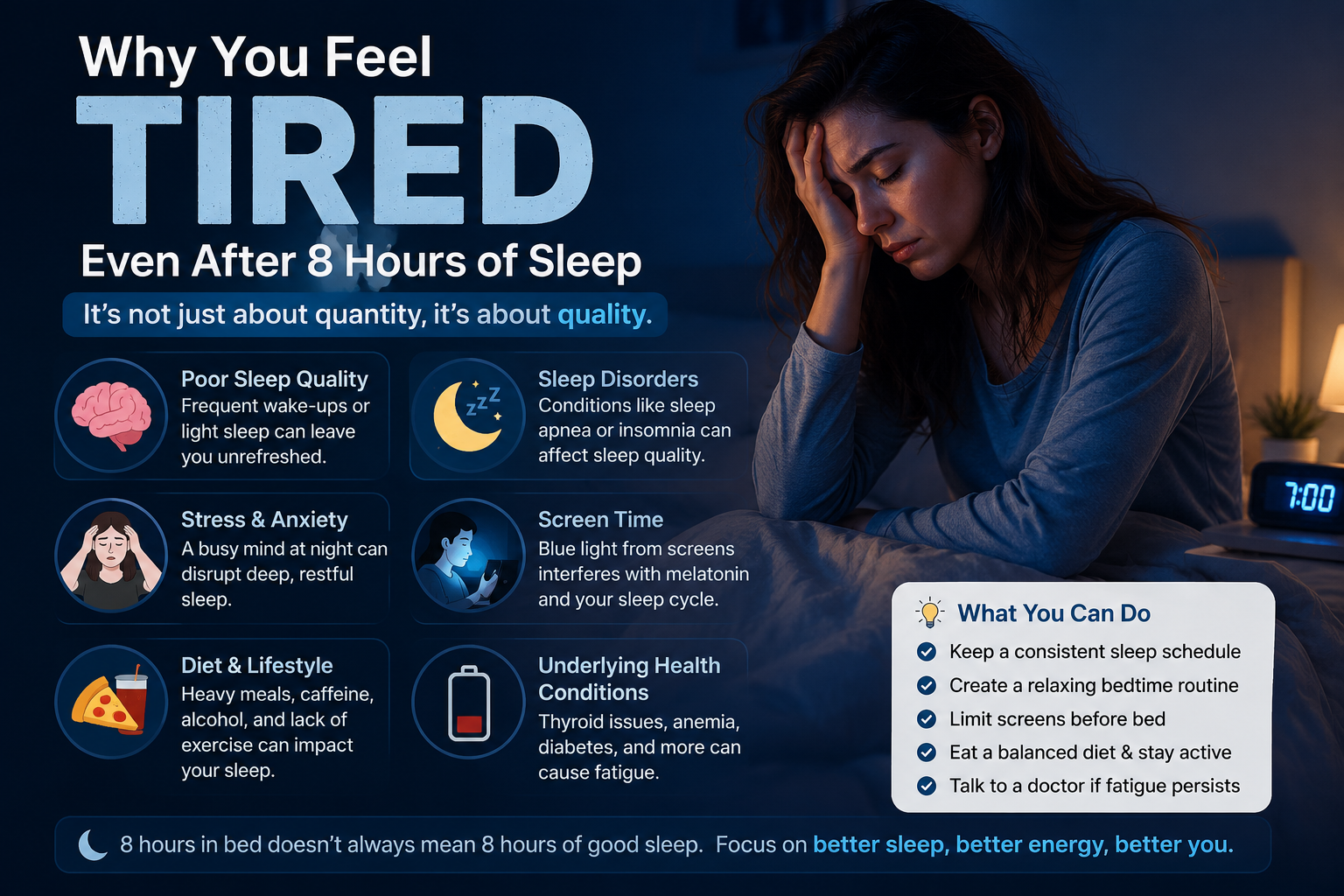
You go to bed on time. You skip the late-night scrolling. You even get your full eight hours. And yet — when the alarm goes off, you still feel like you’ve been hit by a truck. Sound familiar?
“You can get what looks like enough sleep on paper and still wake up exhausted,” says Steven Thau, MD, sleep specialist with Hartford HealthCare Medical Group. “The key is not just the quantity of sleep, but the quality.”
From hidden sleep disorders to habits that sabotage your rest, there are several reasons you might be dragging, despite a full night’s sleep. Here’s what could be going on — and what to do about it.
The Sleep Quality vs. Sleep Quantity Problem
There’s a big difference between sleeping and sleeping soundly. Sleep quality is how well you sleep, not how long you sleep. Good sleep quality is measured by how quickly you fall asleep (ideally 15-20 minutes), the ability to stay asleep (waking just once per night), and spending most of your time in bed asleep rather than awake.
“Your body cycles through different stages of sleep, including light, deep, and REM,” Dr. Thau notes. “If something keeps interrupting those deeper stages — even if you don’t fully wake up — you won’t feel rested in the morning.”
Did you know that interrupted sleep is as bad for you as only getting four hours of sleep? Night wakings disrupt your natural sleep rhythm and leave you with a poor attention span and a negative mood.

1. You Could Have Sleep Apnea
One of the most common — and underdiagnosed — causes of chronic fatigue is sleep apnea.
“Sleep apnea causes you to briefly stop breathing during the night, sometimes dozens or even hundreds of times,” Dr. Thau says. “You might not realize it’s happening, but your brain keeps waking you up to start breathing again.”
This constant disruption keeps you from ever reaching restorative sleep. If you snore, wake up gasping, or feel unusually tired during the day, talk to your doctor about getting a sleep study.
2. You’re Sleeping, But Not Deeply Enough
Stress, noise, caffeine, and even late-night screen time can all reduce deep sleep. To help your body recover properly, try setting a consistent bedtime routine and keeping your room dark, cool, and quiet.
Sleep inertia — the persistent grogginess that occurs upon awakening — is far more likely when someone is suddenly yanked out of deep, slow-wave sleep. If your alarm clock goes off while you’re in lighter stages of sleep, the transition to wakefulness is usually smoother.
3. Your Sleep Schedule Is Inconsistent
Even if you’re getting plenty of sleep, going to bed and waking up at different times can throw your body’s internal clock out of sync.
“Your circadian rhythm plays a big role in how alert or tired you feel,” says Dr. Thau. “When that rhythm is disrupted, you may feel like you’re never sleeping at the right time — even if you technically got enough.”
Try sticking to a schedule, even on weekends, to help your body reset its rhythm.
4. Your Diet and Hydration Could Be Off
A big dinner, late-night snack, or glass of wine before bed can make sleep less restful.
“Alcohol might help you fall asleep, but it fragments sleep later in the night,” Dr. Thau cautions. “Heavy or spicy meals can cause heartburn that wakes you up, and dehydration can lead to muscle cramps or dry mouth that disturb rest.”
Aim to finish eating at least two to three hours before bed, limit alcohol, and drink plenty of water throughout the day.

5. You’re Dealing With Stress or Anxiety
Does your mind start racing the moment your head hits the pillow?
“Stress hormones like cortisol can make it harder to fall asleep and stay asleep,” says Dr. Thau. “Even if you do manage to sleep, it’s often lighter and less restorative.”
Relaxation techniques like meditation, deep breathing, or gentle stretching before bed can help quiet your nervous system and prepare your body for rest.
6. You’re Relying Too Much on Caffeine
It’s tempting to reach for that second (or fifth) cup of coffee when you’re tired, but caffeine can linger in your system for hours to come.
“Having caffeine too late in the day can delay your sleep cycle and reduce deep sleep,” Dr. Thau warns.
Try to avoid caffeine after noon, and see if your morning energy starts to improve.
7. Sleep Inertia: The Morning Grogginess
Sleep inertia is a condition that occurs after waking and causes brief cognitive and physical impairment. You might have experienced it as a groggy sensation or the feeling that you “aren’t yourself” until you’ve had time to wake up fully.
Symptoms of sleep inertia include disorientation, drowsiness, irritability, trouble communicating, inattentiveness, problems with learning and remembering, poor reaction time, and decreased motor skills.
If you feel a little groggy in the morning but typically rally quickly, that’s normal. If the grogginess is intense, lasts a long time, or both, you might want to take action to address the condition’s effect on your life.

8. Hidden Medical Conditions
Sometimes, persistent tiredness is a symptom of a deeper health problem. Possible medical conditions that contribute to tiredness include:
- Anemia: Reduces the blood’s ability to deliver oxygen to your organs.
- Thyroid disorders: Hormone imbalances affect metabolism and energy levels.
- Vitamin D or B12 deficiencies: Can lead to chronic fatigue.
- Chronic fatigue syndrome: Causes extreme fatigue that worsens with minimal exertion.
- Diabetes: Blood sugar fluctuations can cause fatigue.
- Heart disease: Can be an early warning sign of heart failure.
🌙 For sleep initiation · FDA-approved · Genuine medication
⚕️ Prescription required. Always consult your doctor before use. 🛡️ FDA-approved · Licensed pharmacy
How to Improve Your Sleep Quality
To feel at your absolute best, make sure you regularly assess your sleep quality and comfort levels.
- Create a restful bedroom environment: Cool, quiet, and dark. Remove distractions like computers, tablets, and mobile phones.
- Avoid screen time at least an hour before bed: The blue light from devices suppresses the sleep-inducing hormone melatonin.
- Maintain consistent sleep habits: Go to bed and wake up at the same time every day.
- Exercise regularly: Physical activity improves sleep quality and mental health.
- Consider your medications: Antihistamines, opioids, beta-blockers, and benzodiazepines can contribute to sleep inertia.
💡 Expert Tip If you nap, keep them short — in the range of 10 to 15 minutes. Any longer and you risk waking in the deeper part of the sleep cycle, which can trigger sleep inertia.


When to Seek Help
If you’re constantly tired despite a full night of sleep, it’s your body’s way of saying something’s off.
“The good news is that most sleep problems are treatable once you identify the cause,” says Dr. Thau. “You don’t have to live in a cycle of exhaustion — small changes, or the right diagnosis, can make a huge difference.”
A little attention to your sleep health today could mean a lot more energy tomorrow.
If you’ve tried improving your sleep habits but still don’t feel rested, it may be time to get a professional sleep evaluation. A sleep study can uncover underlying conditions like sleep apnea, while consultations with a sleep specialist can guide you toward proper treatment.
🛒 Explore Health & Wellness Products
Visit CanadianPharmacy.shop for a wide range of health and wellness products.
Visit CanadianPharmacy.shop →