Understanding Sleepwalking and Sleep-Driving
What Are Complex Sleep Behaviors?
Complex sleep behaviors are a rare but serious side effect associated with certain prescription insomnia medications, particularly a class known as “Z-drugs” . These behaviors involve engaging in activities while not fully awake, with no memory of the event the next morning . The U.S. Food and Drug Administration (FDA) has issued a Boxed Warning, its strongest safety warning, for these medications due to the risk of serious injuries and even death resulting from these behaviors . For more information on prescription sleep medications available, visit our website.
Types of Complex Sleep Behaviors
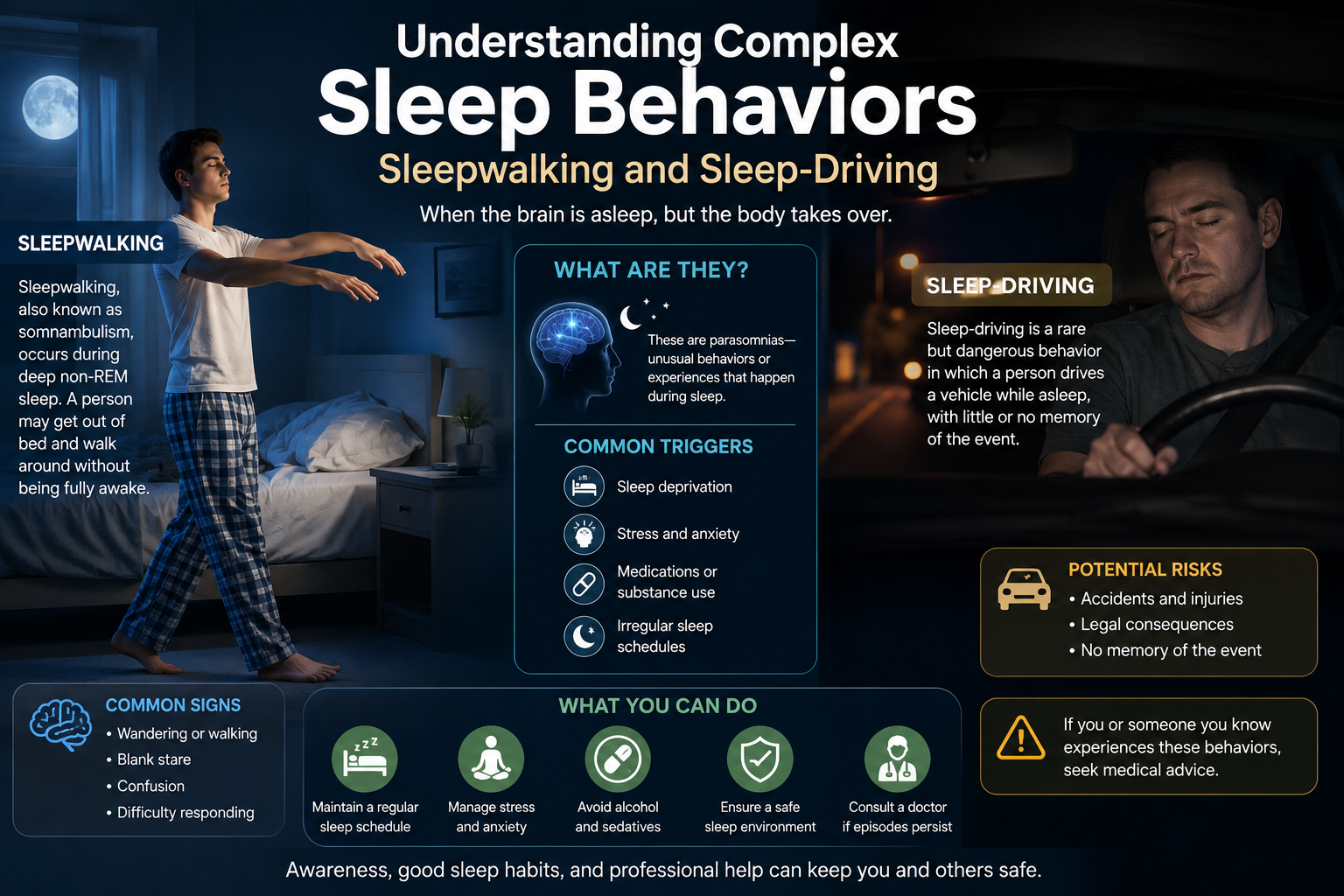
Complex sleep behaviors are a type of parasomnia, which are abnormal behaviors, movements, or experiences that disrupt sleep . They occur during an incomplete awakening from sleep, typically during the deeper, dreamless (NREM) sleep stages . The person is in a state between sleep and wakefulness, acting out behaviors without conscious awareness.
Activities During Incomplete Awakening
The range of reported complex sleep behaviors is varied and can include:
- Sleepwalking (Somnambulism): Getting up and walking around while asleep .
- Sleep-driving: Driving a vehicle while not fully awake, which can lead to fatal motor vehicle collisions .
- Other Activities: Preparing and eating food, making phone calls, having sex, or even cooking .
- Self-Injury and Violent Acts: Rare but serious cases have involved self-injury, gunshot wounds, and violent acts .
Which Medications Are Linked to Complex Sleep Behaviors?
The FDA has specifically identified a class of prescription insomnia medicines called “Z-drugs” as being associated with these rare behaviors . These include:
Zolpidem · Eszopiclone · Zaleplon
- Eszopiclone (Lunesta)
- Zaleplon (Sonata)
- Zolpidem (Ambien, Ambien CR, Edluar, Intermezzo, Zolpimist)
Complex sleep behaviors have occurred in patients with and without a history of such behaviors and can happen even at the lowest recommended doses, or after just a single dose of these medications .
The Serious Risks: What the FDA Found
The primary concern is the potential for serious injury or death. The FDA reviewed 66 cases where patients engaged in activities while not fully awake after taking these medicines . The reported outcomes were severe.
Reported Nonfatal Serious Injuries
- Accidental overdoses
- Falls, burns, and near-drowning
- Exposure to extreme cold leading to loss of limb
- Self-inflicted injuries, such as gunshot wounds
- Apparent suicide attempts
Reported Deaths
- Carbon monoxide poisoning
- Drowning
- Fatal falls
- Hypothermia
- Fatal motor vehicle collisions while the patient was driving
- Apparent suicide
Other reported serious outcomes include intracranial hemorrhages, vertebral and hip fractures from falls, and homicides .
Prevention and Safety Measures
Given the severity of these risks, both healthcare professionals and patients play a crucial role in prevention.
Patient and Provider Safety Steps
For Healthcare Professionals
- Avoid Prescribing to High-Risk Patients: Do not prescribe eszopiclone, zaleplon, or zolpidem to patients who have previously experienced complex sleep behaviors after taking any of these medicines .
- Educate Patients: Advise all patients about the rare but serious risk of complex sleep behaviors, the potential for serious injury or death, and the importance of discontinuing the medication immediately if an episode occurs .
For Patients: Tips for Safer Use
- Read the Medication Guide: Carefully review the Patient Medication Guide that comes with your prescription and discuss any questions with your healthcare provider .
- Follow Dosing Instructions: Take the medication exactly as prescribed. Do not take higher doses or take it more frequently than directed .
- Avoid Alcohol and Other CNS Depressants: Do not drink alcohol or take other medicines that make you sleepy (like opioids or over-the-counter sleep aids) while on these medications, as this can increase the risk .
- Take Only When You Can Get a Full Night’s Sleep: Take the medication only when you can dedicate at least 7-8 hours to sleep to minimize next-day impairment and the risk of complex behaviors.
If you discover that you have engaged in any activity while not fully awake after taking an insomnia medication, stop taking the drug immediately and contact your healthcare provider right away .
Conclusion
Complex sleep behaviors like sleepwalking and sleep-driving are rare but potentially devastating side effects of certain prescription sleep aids. Understanding the risks, recognizing the signs, and knowing what to do are essential for patient safety. If you are taking a Z-drug for insomnia, maintain open communication with your healthcare provider about your treatment and any side effects you experience. Your safety depends on being informed and proactive.
Frequently Asked Questions
🔗 Explore More Resources
Visit Canadian Pharmacy Shop for more information on:
📚 External Resources
For authoritative information on insomnia medications and safety, visit:
- U.S. Food and Drug Administration (FDA) Safety Communication
- FDA Consumer Update: Taking Z-drugs for Insomnia? Know the Risks
- DailyMed: Ambien Full Prescribing Information