Symptoms, Causes, and Treatment Options
Introduction: Understanding Panic Disorder
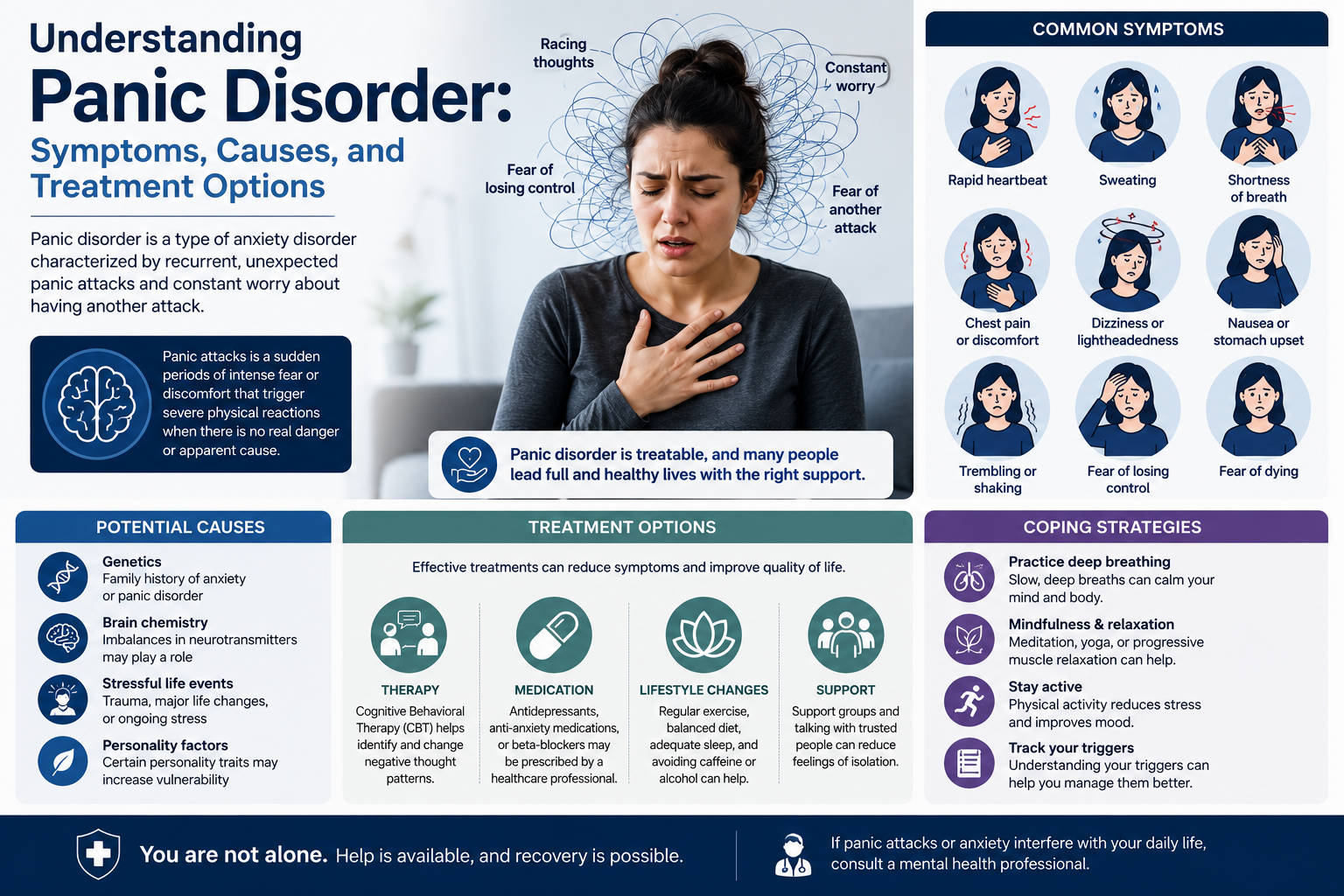
Panic disorder is a common and often debilitating mental illness that affects up to 5% of the population at some point in their lives . It is characterized by recurrent, unexpected panic attacks—sudden surges of intense fear or discomfort that peak within minutes . These attacks can be terrifying, often making individuals feel they are losing control, having a heart attack, or even dying . While a single panic attack can happen to anyone, panic disorder involves a persistent fear of future attacks, leading to significant behavioral changes and a reduced quality of life . This guide provides a comprehensive overview of panic disorder, including its symptoms, underlying causes, and the most effective treatment options available. For more information on prescription medications for anxiety and panic disordersBesuchen Sie unsere Website.
What is Panic Disorder?
According to the DSM-5, panic disorder is defined by recurrent, unexpected panic attacks followed by at least one month of persistent worry about having another attack, or significant maladaptive changes in behavior related to the attacks . This condition is more than just experiencing panic; it involves a cycle of fear and avoidance that can dominate a person’s life.
Understanding the Key Differences
Panic Disorder vs. Panic Attacks
It’s crucial to distinguish between a panic attack and panic disorder. A panic attack is a discrete period of intense fear or discomfort that develops abruptly and peaks within minutes . While panic attacks are relatively common, occurring in 8 to 23% of adults, experiencing one does not mean you have panic disorder.
- Recurrent, unexpected panic attacks. These are not triggered by a specific situation.
- At least one month of persistent worry about having another attack or significant maladaptive behavioral changes (e.g., avoidance).
For instance, a person with a snake phobia who has a panic attack upon seeing a snake is having a situationally-triggered panic attack. In panic disorder, the attacks occur “out of the blue,” which fuels the constant anxiety about when the next one might strike.
Panic Disorder in Children and Adolescents
While less common in young children, panic disorder can develop in adolescents, particularly during puberty . Symptoms in children may be more dramatic, involving screaming, weeping, or hyperventilation . Untreated adolescent panic disorder can lead to significant impairment, including school refusal, social withdrawal, and an increased risk of suicidal ideation.
Recognizing the Symptoms of Panic Disorder
The symptoms of panic disorder manifest on two levels: the acute symptoms of a panic attack and the ongoing symptoms of anticipatory anxiety and avoidance behaviors. Panic attacks typically begin suddenly, without warning, and can strike at any time .
Four or More Must Occur for a Diagnosis
Symptoms of a Panic Attack
A panic attack involves the sudden onset of intense fear accompanied by several physical and cognitive symptoms. According to the DSM-5, at least four of the following 13 symptoms must be present :
- Accelerated heart rate or palpitations
- Sweating
- Trembling or shaking
- Shortness of breath or a sensation of choking
- Chest pain or discomfort
- Abdominal distress or nausea
- Dizziness, unsteadiness, or faintness
- Sensations of chills or heat
- Paresthesias (numbness or tingling sensations)
- Derealization (feelings of unreality) or depersonalization (being detached from oneself)
- Fear of losing control or “going crazy”
- Fear of dying
- A sense of impending doom
The frequency and severity of panic attacks vary widely. Some individuals may have moderately frequent attacks, while others may experience short bursts of more frequent attacks separated by weeks or months without any . Individuals may have both full-symptom attacks (four or more symptoms) and limited-symptom attacks (fewer than four symptoms) .
The Cycle of Worry and Avoidance
One of the most challenging aspects of panic disorder is the intense fear of having another attack . This anticipatory anxiety leads to avoidance behaviors, where individuals begin to avoid places or situations associated with previous attacks to prevent future episodes . Over time, this can lead to agoraphobia, a condition where individuals avoid places or situations that might cause them to panic and feel trapped, helpless, or embarrassed .
Causes and Risk Factors for Panic Disorder
The exact cause of panic disorder has not been determined, but research points to a complex interplay of biological, psychological, and environmental factors .
Genetics, Brain Function, and Stress
Biological and Genetic Factors
- Genetics and Family History: Panic disorder tends to run in families. Having a first-degree relative with the condition significantly increases your risk .
- Brain Function and Neurotransmitters: Brain imaging studies have revealed alterations in the limbic and frontal regions of the brain, particularly involving the amygdala, which is thought to be a primary source of malfunction . Imbalances in neurotransmitters like serotonin, which are part of the autonomic nervous system’s fear network, also play a crucial role .
- Lifestyle Factors: Smoking and excessive caffeine intake are linked to an increased risk of panic attacks and disorder .
Psychological and Environmental Triggers
- Major Stress: Significant life stress, such as the death of a loved one, a serious accident, or a major life change (like a divorce) can trigger the onset .
- Trauma: A history of childhood physical or sexual abuse or a traumatic event like sexual assault increases the risk .
- Health Conditions: There is a strong pathophysiological and psychological connection between medical sickness (like asthma or heart conditions) and panic disorder .
Risk Factors for Panic Disorder
Several factors can increase the likelihood of developing panic disorder, including :
- Age between 18 and 39 years (symptoms often start in the late teens or early adulthood)
- Being female (women are affected more than men)
- Having a family history of panic attacks or panic disorder
- Experiencing a major life event or trauma
- Smoking or excessive caffeine intake
- History of childhood physical or sexual abuse
Diagnosis of Panic Disorder
There is no single test for panic disorder. A diagnosis is typically made by a healthcare provider, such as a primary care physician, psychiatrist, or psychologist, through a comprehensive evaluation . This process includes:
- A Review of Symptoms: The clinician will ask about the nature of the episodes, how often they occur, how long they last, and whether there are any known triggers. They will also assess for the persistent worry and behavioral changes characteristic of panic disorder .
- Medical History: A thorough history will be taken to identify any other conditions that could be contributing to the symptoms .
- Physical Examination and Testing: Because physical symptoms of panic attacks can mimic serious medical conditions (e.g., heart or thyroid problems), a physical exam and lab tests are often conducted to rule these out .
- Screening for Other Mental Health Conditions: Clinicians will also look for other anxiety disorders, depression, and substance use disorders, which commonly co-occur with panic disorder .
Treatment Options for Panic Disorder
Panic disorder is very treatable, and more than 85% of individuals can be helped with appropriate pharmacologic therapy, cognitive-behavioral therapy (CBT), or a combination of both . Treatment strategies are chosen based on the patient’s preference, the severity of the condition, and the presence of agoraphobia.
Medication, CBT, and Lifestyle Approaches
Medications for Panic Disorder
Several types of medications are proven effective in reducing the frequency and severity of panic attacks .
- Antidepressants (SSRIs and SNRIs): Selective Serotonin Reuptake Inhibitors (SSRIs) and Serotonin-Norepinephrine Reuptake Inhibitors (SNRIs) are first-line treatments. They are effective and have a more favorable side effect profile than older antidepressants. Studies show that SSRIs and tricyclic antidepressants (TCAs) are equally effective, but the choice should be based on side effect profiles and patient preference .
- Tricyclic Antidepressants (TCAs): While effective, TCAs are used less frequently due to their side effect profile. They remain an option, particularly when SSRIs are not effective or tolerated .
- Benzodiazepines: These fast-acting anti-anxiety medications, such as alprazolam, can provide quick relief from acute symptoms. However, they carry a risk of dependence and are generally recommended for short-term use or as a “bridge” while waiting for an antidepressant to take effect .
- Other Options: Monoamine oxidase inhibitors (MAOIs) are also effective but are rarely used today due to safety concerns. Neuromodulation techniques like Transcranial Magnetic Stimulation (TMS) are being explored with varying results .
Psychotherapy for Panic Disorder
Cognitive Behavioral Therapy (CBT) is widely considered the most effective form of psychotherapy for panic disorder . Meta-analyses support its efficacy in relieving panic symptoms and overall disability . CBT includes several techniques:
- Cognitive Restructuring: Helps individuals identify and change catastrophic misinterpretations of physical sensations (e.g., that a racing heart is a heart attack).
- Exposure Therapy: This is a core component of CBT. It involves a gradual and controlled exposure to the physical sensations of panic (interoceptive exposure) and to feared situations (in vivo exposure) . The goal is to reduce the power these triggers hold and help the person learn that they are safe .
- Other Techniques: Panic management, applied relaxation, breathing retraining, and exposure through imagery are also used .
A combination of medication and CBT is often the most effective approach . The long-term prognosis for panic disorder is favorable, with over 65% of patients experiencing remission within six months . However, factors like severe illness at the time of initial assessment, high interpersonal sensitivity, and low social class can predict poorer outcomes .
Self-Management and Lifestyle Changes
While professional treatment is essential, several strategies can support recovery:
- Breathing Techniques: Slow, deep breathing during an attack can activate the body’s relaxation response.
- Lifestyle Adjustments: Reducing or eliminating caffeine and alcohol, getting regular physical activity, and prioritizing good sleep hygiene can lower baseline anxiety .
- Stress Management: Regular practice of mindfulness, meditation, or relaxation exercises can help manage overall stress levels.
- Seek Early Treatment: Getting treatment as soon as possible can help prevent panic attacks from becoming more frequent or severe .
Complications and Prevention
Left untreated, panic attacks and panic disorder can significantly affect almost every area of your life, leading to serious complications .
Potential Complications
- Development of specific phobias, such as fear of driving or leaving your home .
- Frequent medical care for health concerns and other medical conditions.
- Avoidance of social situations, leading to problems at work or school.
- Depression, other anxiety disorders, and an increased risk of suicide or suicidal thoughts .
- Alcohol or other substance misuse.
- Financial problems.
- Agoraphobia—avoiding places or situations due to fear of being unable to escape or get help if a panic attack occurs .
- Patients with panic disorder have a significantly increased incidence of coronary artery disease . Panic can cause myocardial ischemia in patients with coronary artery disease, and reduced heart rate variability may theoretically raise the risk of sudden death .
Prevention
There is no sure way to prevent panic attacks or panic disorder. However, these recommendations may be helpful:
- Get treatment for panic attacks as soon as possible to help stop them from getting worse or becoming more frequent.
- Stick with your treatment plan to help prevent relapses or worsening of symptoms.
- Get regular physical activity, which may play a role in protecting against anxiety .
Conclusion
Panic disorder is a prevalent and potentially disabling condition, but it is highly treatable. Early detection is key to beginning appropriate therapy . Effective treatment options, including CBT and medications, can help over 85% of individuals . While the long-term prognosis is favorable, ongoing support and adherence to treatment are crucial for managing this chronic condition and preventing complications . If you or someone you know is experiencing symptoms of panic disorder, it is vital to seek professional help.
Häufig gestellte Fragen
🔗 Explore More Resources
Besuch Canadian Pharmacy Shop for more information on:
📚 External Resources
For authoritative information on panic disorder, visit these trusted resources:
- National Institute of Mental Health (NIMH): Panic Disorder
- Anxiety and Depression Association of America (ADAA)
- Mayo Clinic: Panic Attacks and Panic Disorder
- Neuropedia: Panic Disorder
- Lone Star Cares: Panic Attacks and Panic Disorders
- FamilyDoctor.org: Panic Disorder