
Understanding the Pain & How Fioricet Works
Introduction: Understanding the Tension Headache Cycle
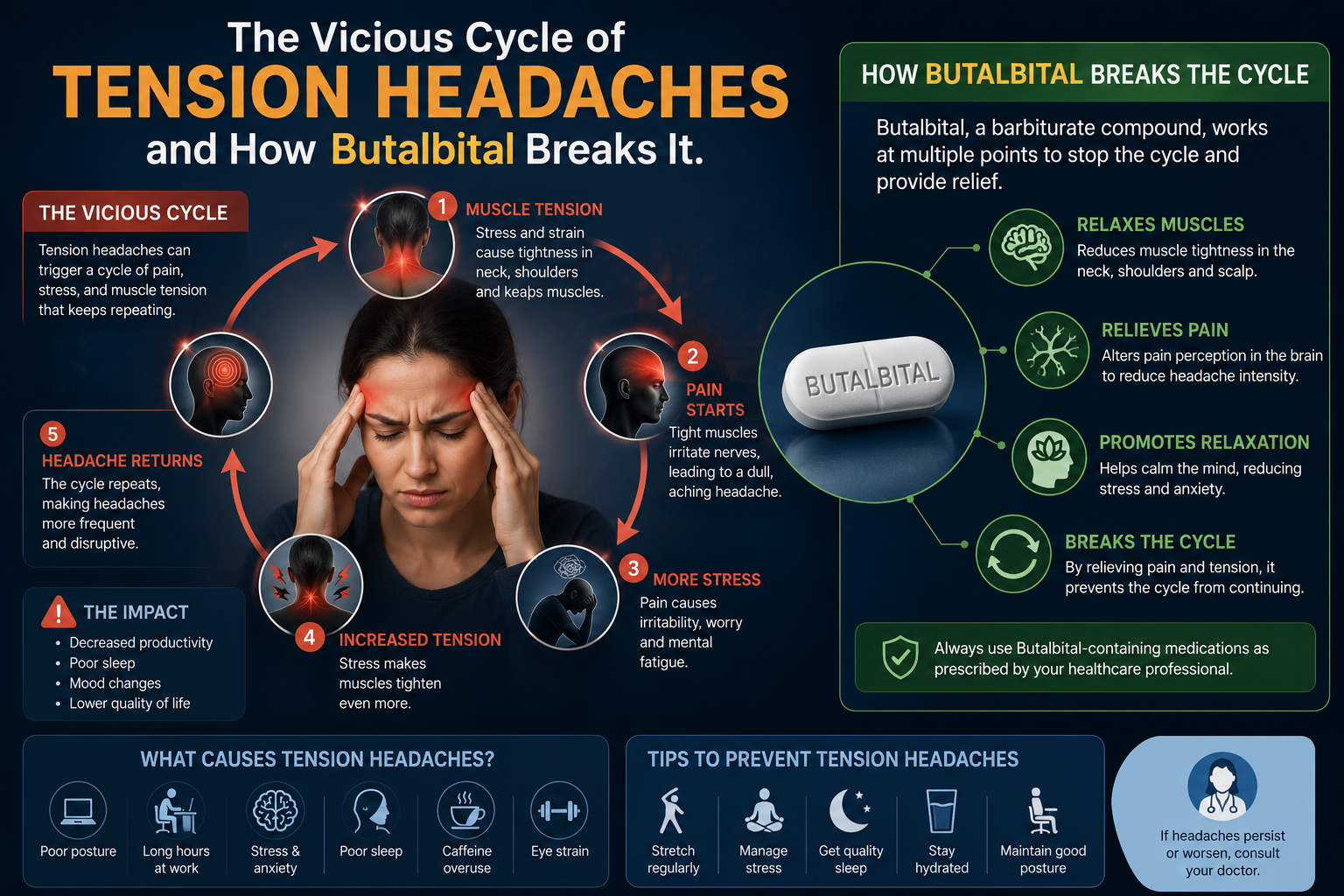
Tension-type headache (TTH) is the most common type of primary headache, often referred to as a “muscle contraction headache,” “stress headache,” or “psychomyogenic headache.” It is characterized by a bilateral, pressing, or tightening pain that is mild to moderate in intensity. This condition can be episodic or chronic, and it is a significant cause of disability and missed work days. While the exact pathophysiology is complex and multifactorial, a vicious cycle often develops involving muscle tension, central sensitization, and pain.
This comprehensive guide will explore the physiology of tension headaches and explain how combination medications like Fioricet (butalbital, acetaminophen, and caffeine) are designed to break this cycle. For more information on prescription medications available online, visit our website.
The Pathophysiology of Tension Headaches
The mechanisms of TTH are intricate, involving both peripheral and central components. Research suggests that tension headaches arise from a combination of muscle contraction, vascular changes, and central nervous system sensitization.
Muscle Tension → Pain → Central Sensitization → More Tension
Muscle Contraction and Peripheral Factors
Historically, TTH was termed “muscle contraction headache,” suggesting tension in the head and neck muscles was the primary driver. Sustained muscle contraction, such as from prolonged poor posture, stress, or tooth clenching, is a known trigger. Research shows that sustained clenching can induce a tension-type headache in a significant percentage of individuals. This contraction can lead to:
- Local Ischemia and Metabolite Release: Sustained contraction can compress blood vessels, potentially leading to localized ischemia (reduced blood flow) and the release of pain-provoking substances like potassium, bradykinin, and serotonin. These substances sensitize peripheral pain receptors.
- Myofascial Trigger Points: The pericranial musculature is a presumed source. These painful “trigger points” are specific spots in skeletal muscles that can elicit pain and are linked to the headache’s intensity. Tender muscles are often found to have higher consistency and hardness in TTH patients.
- Peripheral Sensitization: Sustained contraction and the release of inflammatory mediators can lead to peripheral sensitization of pain receptors, making them more responsive to stimuli. This is a key step in the initiation of the headache.
The Role of Central Sensitization
While peripheral factors initiate the pain, central sensitization—an increased sensitivity of the central nervous system to pain signals—is a key driver of chronic TTH. In patients with chronic TTH, the central nervous system, particularly in the trigeminal system, becomes hypersensitive. This means that normal or sub-threshold signals from the periphery are perceived as painful (allodynia) and pain signals are amplified (hyperalgesia). Functional MRI studies have identified the involvement of several brain regions related to pain perception, including the cingulate cortex, prefrontal cortex, and thalamus. This central sensitization can be exacerbated by sleep disturbances, stress, and autonomic dysfunction, creating a self-perpetuating cycle.
Other Contributing Factors
Several other factors can contribute to the development and maintenance of tension headaches:
- Stress: Psychological stress is a well-known trigger for TTH. Stress increases muscle tension and can also lower the pain threshold.
- Sleep Disturbances: Poor sleep quality, including sleep deprivation and non-restorative sleep, is strongly associated with chronic TTH.
- Autonomic Dysfunction: Dysregulation of the autonomic nervous system may contribute to the vascular changes associated with tension headaches.
- Genetics: There is evidence of a genetic predisposition to chronic TTH, suggesting that some individuals may be more susceptible to developing this condition.
- Trigger (Stress/Poor Posture): Leads to sustained muscle contraction in the pericranial region.
- Peripheral Effects: Ischemia, inflammatory mediator release, and peripheral sensitization.
- Central Sensitization: Amplification of pain signals in the brainstem and cortex.
- Amplified Pain: Normal stimuli now perceived as painful; muscles contract further in response.
- Chronic Pain: This cycle reinforces itself, leading to chronic TTH.
How Fioricet Breaks the Tension Headache Cycle
Fioricet is a combination medication designed to target multiple points in the tension headache cycle. It contains three active ingredients: butalbital, acetaminophen, and caffeine. Each component works synergistically to interrupt the cycle of pain and muscle tension.
Butalbital + Acetaminophen + Caffeine
The Role of Each Component in Fioricet
1. Butalbital: The Muscle Relaxant and CNS Depressant
Butalbital is a short-to-intermediate-acting barbiturate. It is a central nervous system depressant that slows down brain activity and nervous system function. Its specific mechanism for tension headaches is believed to be multifaceted:
- Muscle Relaxation: It helps to relax contracted muscles, directly addressing the muscle tension component of the headache. This reduces the peripheral input that drives the headache cycle.
- GABAergic Enhancement: Butalbital binds to a site on the GABAA receptor, prolonging the opening of chloride channels. This enhances the inhibitory effects of GABA, the primary inhibitory neurotransmitter in the brain, leading to sedation and a reduction in neuronal excitability. This action dampens central sensitization.
- Cortical Depression: By depressing the sensory cortex, butalbital reduces the brain’s perception of pain, effectively breaking the cycle of amplified pain signals.
By acting on the brainstem and cortex, butalbital helps calm the central nervous system, reducing the overactivity and heightened sensitivity that perpetuates the pain cycle.
2. Acetaminophen: The Painkiller
Acetaminophen is a non-opiate, non-salicylate analgesic and antipyretic. It works primarily by blocking pain signals in the brain and spinal cord by inhibiting cyclooxygenase (COX) enzymes, which reduces prostaglandin production. Prostaglandins are key inflammatory mediators that sensitize pain receptors. By reducing prostaglandin synthesis, acetaminophen directly reduces peripheral and central pain signaling. It is a well-known and effective painkiller that complements the effects of butalbital.
3. Caffeine: The Vasoconstrictor and Efficacy Booster
Caffeine is a central nervous system stimulant. It plays two important roles in Fioricet:
- Vasoconstriction: It helps decrease the size of blood vessels in the head, which can reduce excess blood flow and pressure that may contribute to headache pain. This is particularly relevant in the vascular theory of headache.
- Analgesic Enhancement: Caffeine is thought to enhance the pain-relieving effects of acetaminophen, potentially by up to 40%. It may also facilitate the absorption of other pain relievers and counteract the sedative effects of butalbital.
- Reduces CNS Overactivity: Butalbital depresses the sensitized central nervous system, reducing neuronal excitability.
- Relaxes Muscles: Butalbital reduces peripheral muscle tension from stress and trigger points, addressing the initial trigger.
- Blocks Pain Signals: Acetaminophen prevents pain signals from reaching the brain by reducing prostaglandin production.
- Reduces Blood Vessel Pressure: Caffeine constricts blood vessels in the head, reducing vascular contributions to pain.
- Enhances Efficacy: Caffeine enhances the analgesic effect of acetaminophen, making the combination more effective.
Important Safety Notes on Fioricet
While Fioricet can be highly effective, it is important to be aware of its limitations and risks. It is not a first-choice medication for headaches and should only be used when other non-opioid analgesics are inadequate.
- Butalbital is habit-forming and potentially abusable. There is a risk of physical and psychological dependence with prolonged use.
- There is a risk of developing a medication-overuse headache (rebound headache) with frequent use (more than 3 days per month).
- Use is generally limited to short-term treatment and should not exceed 6 tablets per day.
- Do not stop abruptly after long-term use; taper the dose down slowly over 2 to 4 weeks to avoid withdrawal symptoms.
Fioricet is typically indicated for the relief of the symptom complex of tension (or muscle contraction) headache. Evidence supporting its safety and efficacy for treating multiple recurrent headaches is unavailable. It is usually prescribed to be taken every 4 hours as needed, with a maximum of 6 tablets per day. It is not used to prevent headaches or migraines.
Additionally, patients with liver disease, chronic alcohol use, or those taking other acetaminophen-containing products are at increased risk of hepatotoxicity and should avoid Fioricet. Avoid alcohol while taking this medication, and do not drive or operate machinery until you know how it affects you.
Conclusion
The tension headache cycle is driven by a complex interplay of peripheral muscle tension, pain signaling, and central sensitization. Fioricet is specifically formulated to break this cycle. Its components work synergistically: butalbital relaxes muscles and depresses the overactive central nervous system, acetaminophen blocks pain signals, and caffeine enhances efficacy while reducing vascular pressure. Understanding this mechanism can help patients appreciate how this medication provides relief.
🔗 Explore More Resources
Visit Canadian Pharmacy Shop for more information on:
📚 External Resources
For authoritative information on headache disorders, visit:
- National Institute of Neurological Disorders and Stroke (NINDS)
- WebMD: Fioricet Drug Information
- Mayo Clinic: Tension Headache